Writing in the Margins
Annotation as a way of arguing back, and why the second reading is the real one.
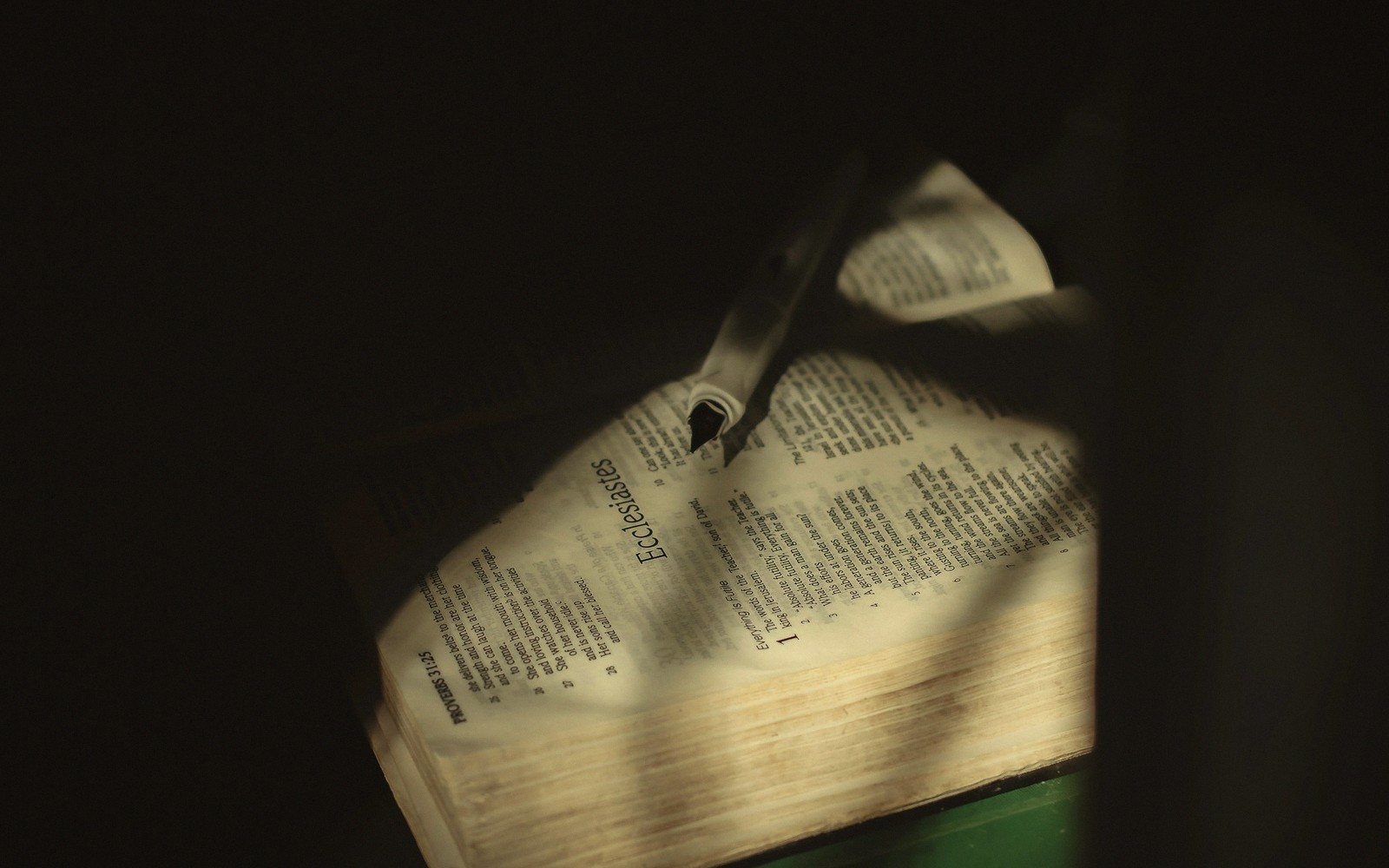
A pencil in the hand changes the relationship. The second reading is where you actually meet the book.
By Nell Ashby · life · 5 min read
The Argument Begins in Pencil
I came late to annotation. For years I treated my books the way I'd been trained to treat library copies — with a reverence that was really just distance. Pristine pages felt like evidence of respect. What they were evidence of, I've come to understand, was passivity: the reader as receiver, the author as authority, no conversation possible.
The shift happened with a book I disagreed with strenuously enough that I needed somewhere to put the disagreement. I don't remember which book. I remember the pencil, and the particular satisfaction of writing no in a margin and meaning it. After that I couldn't stop. Annotation turns out to be less a habit than a practice — something you have to decide to do, and then keep deciding, until it becomes the only way you know how to read.
What annotation does, at its core, is convert reading from reception to argument. You are no longer just moving through someone else's thinking. You are thinking alongside it, or against it, or ahead of it — noting where the logic holds and where it quietly slips, where the prose earns its confidence and where it borrows the cadence of confidence without the substance. The book stops being a finished object and becomes, instead, a working document. The writer made one set of choices. The annotating reader is making another.
The Second Reading
Here is the thing about annotation that took me years to name: the real reading doesn't happen the first time through. The first reading is reconnaissance — you're learning the terrain, following the argument, getting the shape of the thing. The second reading, pencil in hand with your own marginal notes already there, is where you actually meet the book.
You can see exactly where you were persuaded and then changed your mind three chapters later.
Going back through a heavily annotated copy is a strange experience. The two voices on the page — the writer's and your own past self's — create something that neither produced alone. You can see exactly where you were persuaded and then changed your mind three chapters later. You can see the moment you stopped trusting the narrator, or the moment you trusted her more than you expected to. The annotations become a record of reading as a process rather than an event, which is what reading actually is and what we pretend, in our tidy summaries and year-end lists, that it isn't.
I want to be careful here about what I mean by second reading, because I don't mean re-reading in the conventional sense — returning to a beloved book for comfort or pleasure, though that has its own value. I mean the revisiting that annotation makes productive: going back through a book not to recapture the first experience but to examine it. The pencil marks are prompts. Where past-me underlined something, present-me has to ask why. Sometimes the answer is obvious. Sometimes I find I've underlined a sentence I'd now argue against. That tension is more useful than either the original underlining or a fresh opinion would have been on its own.
What You're Actually Doing
There's a version of annotation that's really just highlighting — the digital reader's compulsion to mark the quotable, the resonant, the shareable. I'm not interested in that version. What I'm interested in is the annotation that constitutes genuine pushback: the question in the margin, the word really followed by an underline, the small note where you name what the writer is avoiding. This is the annotation that requires you to have a position, which means it requires you to have actually engaged rather than merely absorbed.

The best annotation is uncomfortable to look at later because it shows you thinking in real time, before you've organised your response into something presentable. It shows you wrong, sometimes. It shows you uncharitable. It shows you missing the point and then catching it two pages on. Reading in this way — slowly, argumentatively, willing to leave a record of the mess — is the opposite of reading for the annual total.
There's also something worth saying about what annotation does to the critic in you. Writing even a few words in a margin commits you. You can't annotate vaguely — the space won't allow it. You have to name the thing: contradiction, evasion, this is the actual argument, not the one she claims to be making. That compression is clarifying. You discover what you think by being forced to say it in six words above a paragraph you're not allowed to rephrase.
I annotate non-fiction more heavily than fiction, and essays more heavily than either. The essay form invites it — it's already a form built on the idea that thinking in public is worthwhile, that the movement of a mind on a page has value. To annotate an essay is to accept that invitation and extend it: to say, I will bring my mind to this, and we will see what the two minds together can produce that neither managed alone.
My most annotated books are also the ones I think about most. I don't know whether that's because I annotated them or because the books that deserved annotation were the ones worth thinking about. Probably both. The causality runs in both directions, the way it does with most reading habits worth keeping.